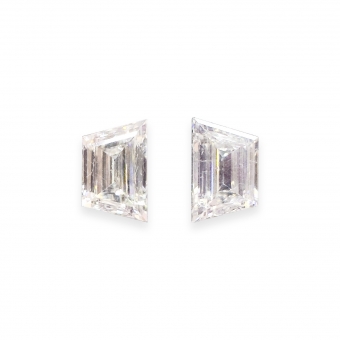
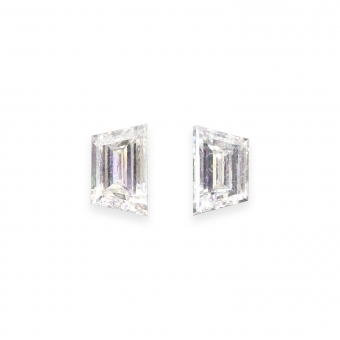
Choose Matched Diamond Pairs for the Intended Setting
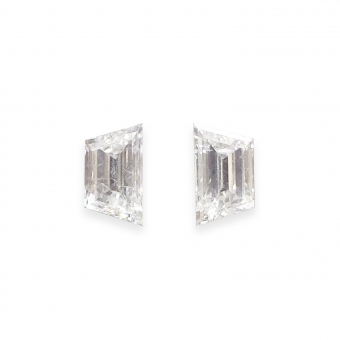
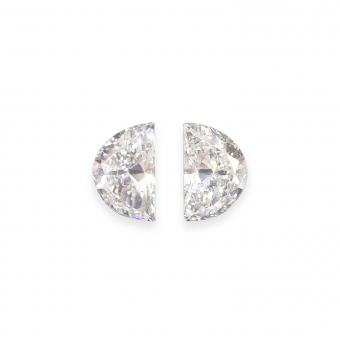
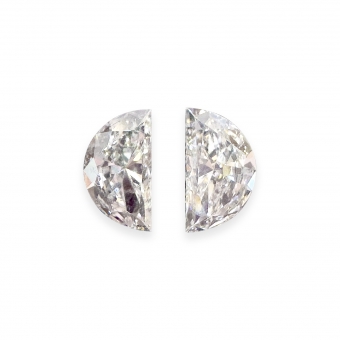
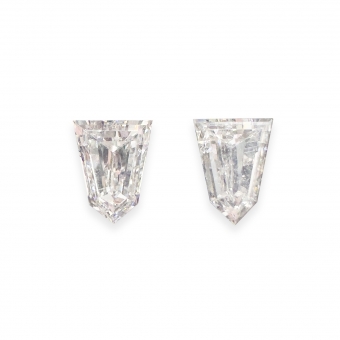
When selecting matched loose diamonds, compare both stones together rather than relying on their combined carat weight. For side stones, the outline, proportions and orientation determine how the pair frames the center stone.
Half-moon, trapezoid, shield and other fancy shapes create different transitions between the center setting and the shoulders of a ring. Start with the center stone’s actual dimensions, then consider how much width and coverage the side stones should provide.
- Measurements: request the length, width and depth of each stone.
- Outline: compare the shapes and proportions as a pair, including the edges that will face the center stone.
- Appearance: ask how closely the stones match in color and face-up appearance.
- Weight: confirm the individual weights where available and whether the listing states a combined pair weight.
Explore our wholesale diamond engagement rings for setting references. Identify the specific design you have in mind so stone compatibility can be reviewed before you commit to the combination.
Separate Diamond Origin from Color Origin
For a colored diamond, two different questions matter: is the diamond natural or lab-grown, and is its color natural or the result of treatment? A description such as “yellow diamond” does not answer both questions.
Request the available information for the exact stone, including any laboratory report and treatment disclosures. Where a formal color grade is stated, check its wording against the report rather than treating a descriptive product name as a laboratory assessment.
Photographs are useful for an initial selection, but lighting and screen settings can affect the color you see. Ask what additional images or viewing information are available before making a color-sensitive purchase. Our diamond certification information explains the documentation to discuss when requesting your quotation.
Send a Stone Brief That Leaves Less to Guesswork
Include the product reference, quantity, intended use and required dimensions. State whether you need a single stone, a matched pair or several coordinated stones. Add your preferences for diamond origin, color, clarity and documentation, together with a budget range if you have one.
For an existing setting, provide its reference, images and available measurements. If the setting has not yet been made, explain which details are flexible. Allowing a small adjustment to the design may offer different stone choices than insisting on a fixed mounting.
Confirm availability for the exact stone or pair before approving the project. A later purchase with the same shape and carat weight should not be assumed to reproduce the original dimensions or appearance.
Loose Diamond Buying FAQs
Does a 0.60 ct diamond pair mean each stone weighs 0.60 ct?
Not necessarily. The figure may describe the combined weight of both stones. Confirm the unit before comparing quotations, and request the individual weights where available. Do not assume a pair’s total weight is divided equally between its stones.
Is a fancy-cut diamond the same as a fancy-color diamond?
No. Fancy cut refers to the diamond’s shape or cutting style, while fancy color concerns its color. A trapezoid or half-moon description does not establish a color grade, and a color description does not establish the stone’s shape.
Will a diamond fit if its length and width match the setting?
Those measurements are only part of the check. Depth, outline and the details of the mounting also matter. Have the actual stone specifications reviewed against the setting before purchase; a matching shape name or approximate carat weight is not enough.
Can one stone from a matched pair be replaced later?
A close replacement may be difficult to source, particularly for unusual outlines or proportions. Keep the original measurements, images and any reports. If a replacement is needed, provide details of the remaining stone so the possibilities can be assessed without assuming an exact match will be available.